
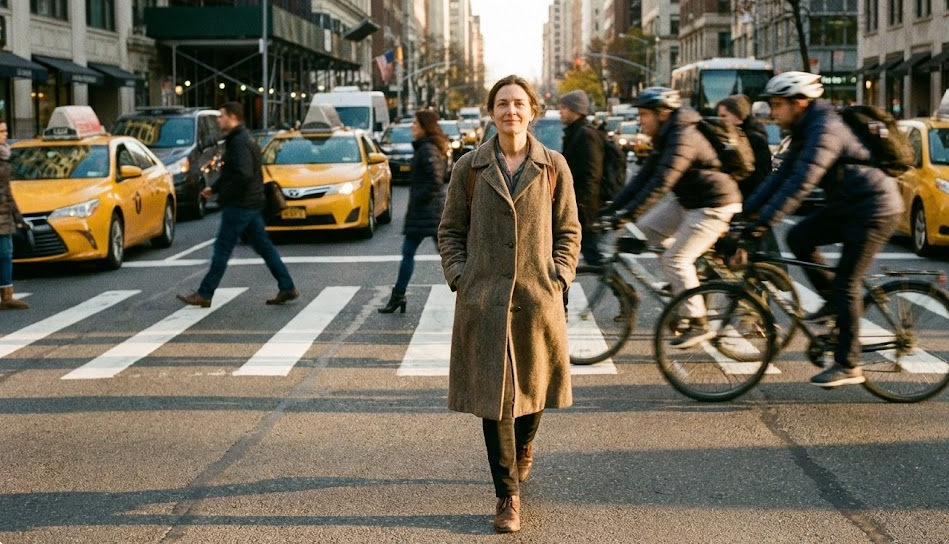
I spent twenty minutes yesterday looking for my car keys while I was actually holding them in my left hand. It sounds like the punchline to a bad joke about getting older, but for me, it was a moment of genuine clarity. I was moving so fast, mentally jumping three steps ahead to the meeting I was late for and the grocery list I hadn’t finished, that I literally couldn’t feel the cold metal of the keys pressed against my own palm. My brain had checked out of my body and was already halfway across town.
We do this all the time, don’t we? We live in this strange, breathless state of “next.” We’re eating lunch while thinking about dinner. We’re watching a sunset through the screen of a phone because we’re already imagining the post we’ll make about it later. It’s exhausting. And the weirdest part is that we’ve started to wear this exhaustion like a badge of honor. If you aren’t busy, if you aren’t “on,” then what are you even doing with your life? That’s the lie we’ve been fed, anyway.
I’ve been trying to unlearn that lately. It’s not easy. It’s actually surprisingly uncomfortable to just… sit. But I’m starting to realize that the things I actually care about—the stuff that makes life feel like it has some meat on its bones—don’t happen when I’m rushing. They happen in the gaps. They happen when I’m moving slow enough to actually notice them.
The invisible clock we’re all racing against
There’s this unspoken pressure that follows us around like a shadow. I call it the invisible clock. It’s that feeling that you’re constantly falling behind, even if you don’t know exactly what you’re falling behind on. It’s the reason we feel guilty for taking a nap on a Sunday afternoon or why we feel the need to listen to a “productive” podcast at double speed while we’re out for a walk. We’ve turned every waking moment into a resource to be optimized.
I remember talking to a friend about this a few weeks ago. She’s one of those people who seems to have it all together—high-powered job, great kids, always seems to be doing something impressive. She confessed to me that she hasn’t sat down to read a book for pleasure in three years because every time she picks one up, she starts thinking about the three other things she “should” be doing instead. That’s heartbreaking, isn’t it? That we’ve optimized the joy right out of our own lives.
It’s not just about being busy, though. It’s about the vibration of it all. We’re living at a higher frequency than we were ever designed for. Our ancestors dealt with stress, sure—sabre-toothed tigers and failing crops are no joke—but they also had long stretches of nothing. Long hours of walking, sitting by a fire, or just waiting for the seasons to change. We’ve eliminated the waiting. We’ve filled every silence with a notification or a scroll. And I think, deep down, our nervous systems are just screaming for a break.
What “slow living” actually looks like (and what it isn’t)
When I first heard the term “slow living,” I pictured someone in a linen dress, living in a cottage in the woods, making their own butter. It felt very aesthetic, very expensive, and very unattainable. I live in a regular house, I have a mortgage, and I definitely don’t have time to churn butter. I thought it was just another trend for people who have enough money to not have to worry about time.
But I’ve realized that’s not it at all. Slow living isn’t about the speed at which you move your feet; it’s about the intention behind the movement. It’s about choosing to do one thing at a time. It’s the difference between slamming a cup of coffee while standing over the sink and actually sitting down, feeling the warmth of the mug, and tasting the roast. It takes the same amount of time—maybe three minutes—but the impact on your brain is completely different.
It’s also about saying no. A lot. And that’s the part that people don’t mention in the pretty photos. To live slowly, you have to be okay with disappointing people. You have to be okay with not being “in the loop” on every new show or every trending news story. You have to prune your life so the things that remain actually have room to grow. It’s a quiet rebellion against the idea that more is always better.
Finding the rhythm in the mundane
I’ve started looking for “anchors” in my day. These are small, repetitive tasks that I used to rush through but now try to treat as a sort of meditation. Washing the dishes is a big one. I used to hate it. I’d try to do it as fast as possible so I could get back to the couch. Now? I try to focus on the temperature of the water, the smell of the soap, the weight of the plates. It sounds cheesy, I know. But it’s five minutes where I’m not worried about the future. I’m just… there.
- Making the bed with actual care instead of just pulling the duvet up.
- Walking to the mailbox without taking my phone.
- Grinding coffee beans by hand (okay, sometimes I still use the electric one, but the hand crank is a nice ritual).
- Actually listening to the entire song instead of skipping halfway through.
The digital weight in our pockets
We can’t talk about slowing down without talking about the little glowing rectangles in our pockets. They are the ultimate accelerators. They make everything feel urgent. An email from a boss at 9:00 PM feels like a fire that needs to be put out immediately. A comment from a stranger on the internet can ruin your whole afternoon. We’re carrying the entire world’s opinions and tragedies with us 24/7. No wonder we’re all so twitchy.
I’m not saying we should all go back to landlines and paper maps—I’m far too reliant on GPS for that—but we need to acknowledge the weight of it. Every time we check our phones, we’re fragmenting our attention. We’re breaking the flow of whatever we were doing. It takes something like twenty minutes to fully get back into a deep state of focus after an interruption. If you’re checking your phone every ten minutes, you are literally never fully present. You’re living your life in ten-minute slices.
I tried an experiment last month. I turned off all notifications except for phone calls and text messages. No “so-and-so liked your photo,” no “breaking news,” no “sale ends in three hours.” The first few days, I felt a weird phantom vibration in my leg. I kept reaching for the phone out of habit, like a nervous tic. But after a week? The background noise in my head started to quiet down. I realized that 99% of those notifications weren’t actually important. They were just people or companies shouting for my attention, and I was just giving it away for free.
Small shifts, big changes
If you’re feeling that itch to slow down, don’t try to change your whole life overnight. That’s just another form of rushing. Start with the “liminal spaces”—the transitions between things. When you get in your car to drive somewhere, sit there for thirty seconds before you turn the engine on. Just breathe. When you finish a task at work, don’t immediately jump to the next one. Take a minute to stretch, look out the window, and acknowledge that you finished something.
I’ve also found that doing things the “hard way” can sometimes be the best way to slow down. Write a letter by hand. Cook a meal from scratch instead of ordering in. Walk to the store instead of driving. These things aren’t “efficient,” but they are satisfying. They give your brain time to wander. Some of my best ideas have come to me while I was doing something “boring” like weeding the garden or staring at a pot of water waiting for it to boil.
We’ve been taught to fear boredom, but boredom is actually where the magic happens. It’s where creativity lives. It’s where you finally start to hear your own voice instead of the echoes of everyone else’s. If you never give yourself space to be bored, you never give yourself space to grow.
Why this matters for the long haul
Ultimately, I think the reason we need to slow down is because life is shorter than we think, but also longer than we realize. If we spend every day rushing to get to the next thing, we’re going to wake up in thirty years and wonder where it all went. We’ll have a lot of checked-off to-do lists, but we won’t have many memories of actually *being* there.
When I look back on my favorite moments, they aren’t the ones where I was being “productive.” They’re the long, lingering dinners with friends where we stayed at the table for hours after the food was gone. They’re the rainy afternoons spent doing nothing in particular. They’re the moments when time felt like it stretched out and became something you could actually inhabit.
Slowing down isn’t about being lazy. It’s about being responsible with your limited time on this planet. It’s about deciding that your peace of mind is more important than someone else’s expectation of your speed. It’s a slow process—ironically—and some days I’m better at it than others. I still find myself checking my watch too often. I still feel that spike of anxiety when my inbox gets too full.
But then I remember the keys in my hand. I take a breath. I feel the weight of them. I feel the floor under my feet. And I remind myself that I’m not in a race. There is no finish line, other than the one we’re all eventually going to hit anyway. So we might as well take the scenic route. We might as well see what happens if we just… stop for a second.
It’s okay to be the person who moves a little slower. It’s okay to not have an opinion on everything. It’s okay to let the world spin on without you for a while. It’ll still be there when you’re ready. And honestly? It’ll probably look a lot clearer once you’ve had a chance to catch your breath.